
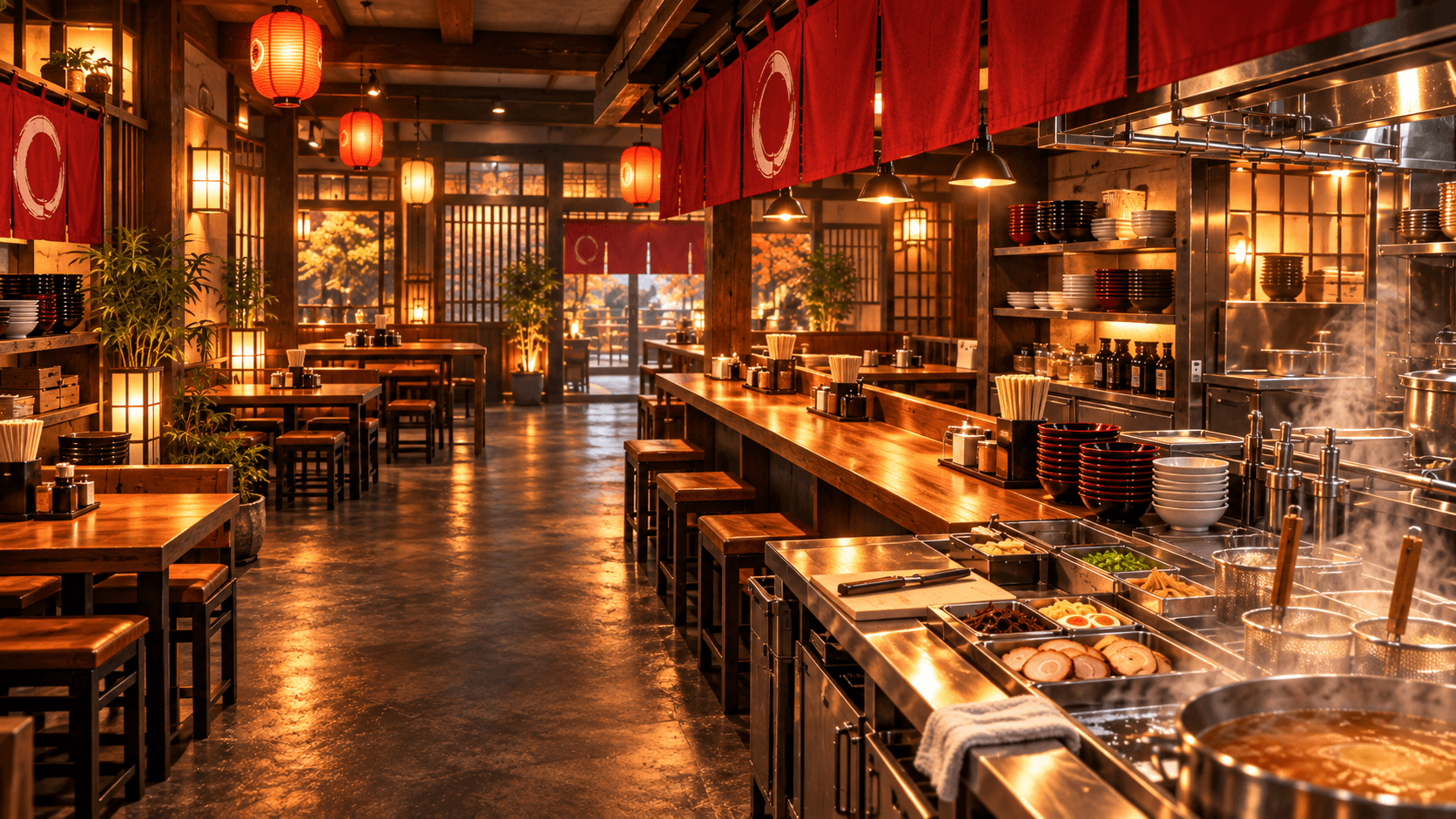
Japanese Ramen Simulator ingredients are purchased, delivered in boxes, stored, prepared, and physically used in soup, noodles, toppings, and side dishes. Buy for the menu you can actually serve, clear the delivery area, refrigerate items marked for cold storage, and keep active supplies beside the station that uses them. Official sources confirm several ingredient types, but they do not provide a complete public catalog for every Shop Level. The list below is therefore labeled “confirmed ingredients observed in current sources,” not “all ingredients.” Early Access updates can also change availability, limits, and unlock levels.
Version note: Specific unlock information in this page comes from the official v0.1.48.17626 Day 1 update dated October 9, 2026.
Ingredient System Overview
Ingredients connect purchasing, storage, preparation, cooking, and money management. Steam confirms that players prepare ingredients, develop original menu items, and combine soup ingredients to influence aroma and umami. It also confirms that toppings are placed physically and that prepared ramen ingredients can be reused in rice-bowl dishes.
That freedom makes organization important. Keep raw or unprepared supplies separate from prepared toppings, and keep finished food separate from dirty tableware and discarded packaging. The game’s physical handling means a badly placed box can become a real workflow obstruction.
Confirmed Ingredients Observed in Current Sources
The following names appear in official Steam copy, official Day 1 notes, or clearly observed gameplay footage collected in the project. Presence does not mean every item is unlocked on Day 1.
| Group | Confirmed examples | Evidence and caution |
|---|---|---|
| Soup and sauces | Pork soup, chicken soup, beef soup, soy sauce, miso, tantan sauce | Official Steam and update notes; combinations and access vary |
| Toppings and produce | Nori, green onion, menma, bean sprouts, cabbage, chives, egg | Official notes and observed gameplay; not a complete topping list |
| Meat | Pork bones, pork belly, pork loin or prepared chashu-related items | Official notes and observed gameplay; preparation states differ |
| Pantry items | Noodles, rice, bonito flakes | Official update notes and gameplay references |
| Side-dish supplies | Gyoza and beer-related supplies | Official Steam confirms gyoza cooking and beer service |
Chives are explicitly confirmed as a new Day 1 ingredient. The official notes say they can be cut on a cutting board and used as a ramen topping. The same notes reference green vegetables, bonito flakes, eggs, pork belly, tantan sauce, and chopped green onion in purchasing or system fixes.
Buying Supplies
Purchase against a short service plan rather than filling every available surface. Before ordering, check what is already in storage, which menu items can currently be ordered, and which station has enough room to receive the delivery.
Observed gameplay shows ordered supplies arriving as boxes outside or at a delivery point. Players then carry and unpack those boxes. The official update also confirms that the purchase cart exists and that its handling was adjusted for steering, braking, small turns, and reversing.
Use this purchasing routine:
- Check the next service menu and current stock.
- Order only the missing supply types.
- Leave a clear path for boxes and the cart.
- Move refrigerated goods first.
- Put station supplies near their point of use.
- Dispose of empty packaging and reset the delivery area.
Delivery and Receiving
Do not open the shop with boxes scattered through the kitchen. Unpacked goods should move directly to refrigeration, dry storage, or the correct preparation station. Keep the customer entrance and service route separate from the receiving lane where the layout allows it.
The Day 1 update fixed a mismatch between the purchase-box placement preview and the delivered box’s real size and direction. That change is useful context: delivery boxes occupy physical space, so plan a receiving zone instead of assuming they are menu-only inventory.
Refrigerated Items and Storage
Use the in-game refrigeration marker as the authority for what needs cold storage. Collected gameplay repeatedly shows players moving marked food into refrigerators before ending the day. The official Day 1 notes confirm that applicable refrigerator contents persist overnight even if the door is open at closing.
The same official notes clarify what the refrigerator tutorial does not count: items outside the shop, food currently cooking, completed ramen bowls, loose cooked noodles, and noodles still in a noodle basket. This does not mean those items can never be placed or preserved; it describes how the current tutorial identifies applicable unstored food.
Stacked bottles and items need attention too. The update states that remaining quantity and status are shown for the top item that will be taken next, including sauce bottles, spicy miso bottles, beer glasses, and drinks.
Using Ingredients in Recipes
Start from the customer order, not from the nearest ingredient. Confirm the soup and sauce, cook the noodles, then add the requested toppings. The recipes guide explains the full assembly loop and why no unverified universal temperature or timing chart is used here.
Prepare ingredients close to the station that consumes them, but keep enough separation to avoid mixing orders. Cutting-board placement can be stabilized: official Day 1 notes say aiming at a placed cutting board and right-clicking fixes or releases it, while ingredients can still be cut on the fixed board.
Avoiding Waste
Waste control begins before purchasing. An unnecessary box ties up cash and space; an unpacked refrigerated item risks being forgotten; an extra topping can make an order wrong; and a finished bowl prepared too early can lose quality before service.
- Order from a checked stock list.
- Keep cold-storage capacity available before a delivery arrives.
- Prepare in smaller batches until demand is understood.
- Label work areas through consistent placement rather than scattered piles.
- Use older prepared stock first when its state is still valid in-game.
- Keep trash bags, bins, and packaging away from food assembly.
These are workflow recommendations, not hidden spoilage formulas. The project sources do not verify exact shelf-life timers or waste costs.
Ingredient Management During Rush Periods
Choose one person to watch stock in a larger co-op group. That player can unpack deliveries, refill toppings, remove packaging, and warn the cook before a critical item runs out. In a smaller group or solo game, perform that check before opening and whenever the customer queue briefly clears.
Keep a small active supply at the station and the reserve in storage. This reduces clutter while avoiding long runs to the refrigerator for every bowl. If a station repeatedly empties, improve its storage position or layout before buying a wider menu.
Confirmed Unlocks Worth Knowing
Official v0.1.48.17626 notes confirm a small number of version-specific unlocks:
- Drinks including cola, diet cola, soda, oolong tea, and barley tea can be purchased and ordered from Shop Level 25.
- Bonito flakes can be purchased from Shop Level 25.
- Green vegetables and chives become available for purchase or topping orders at Shop Level 26.
- Tantan sauce and chives can be purchased at Shop Level 26.
- The egg order limit is six cartons per purchase, after which another order can be placed.
This is not a full unlock table. For how to weigh progression purchases, see Upgrades; for early cash discipline, use the Money Guide or return to the Beginner Guide.